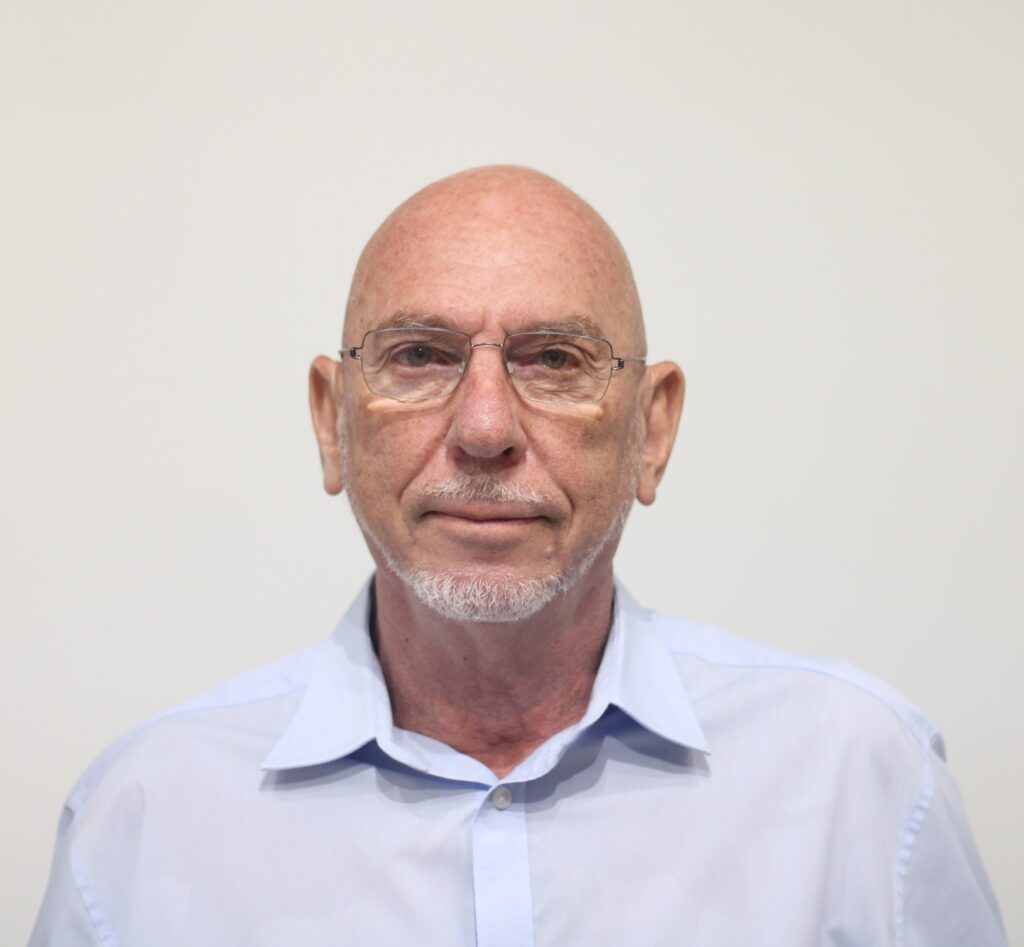
Dr Frederik Johannes Mostert
An Overview of Historical Developments in Ballistics Technology in South Africa.
Early innovation in ballistic technology by indigenous people in Southern Africa with bows and arrows, demonstrated that ecological knowledge, stealth and stamina could outperform sophistication, rapid intervention and brute force. Throughout the winds of change that swept over this remarkable southern locale of Africa the last few centuries, innovation remained part and parcel of local developments in the ballistics technology field. The developments were driven by unique geo-political, socio-demographical and industrial factors. In this paper the developments in the technology of ballistics in South Africa over the last few centuries are reviewed and correlated with developments elsewhere.
Dr Frederik Johannes Mostert obtained a PhD in Physics from the University of Stellenbosch in 1983. From 1983 to 2005 he worked at Somchem (division of Denel), which later became Denel Munitions. From 1993 to 2005 he held the position of Chief Scientist in the Detonics section of the Rockets and Missile department. From 2005 to 2020 he was employed by the Landward Sciences group of the Defence Peace Safety and Security (DPSS) division of the CSIR in Pretoria, as Principal Scientist. After his retirement from the CSIR in 2020 he joined DeltaV-Aerospace (Pty) ltd., as the head of the Detonics Department. He held this position until June 2023 before starting his own consulting company, ExploPhys (Pty) Ltd., in July 2023. He currently specializes in mentorship of young talent in the Explosion Mechanics field at various institutions.
Dr Mostert has authored and co-authered more than 30 peer reviewed papers in the field of Explosion Mechanics and Terminal Ballistics, and made many contributions to various proceedings of the International Symposium on Ballistics. He was co-receipent of the Neil Griffiths Memorial Award, on two occasions, for the best contribution in the field of shaped charges.

James D. Walker
Impacting an Asteroid: The DART and Hera Missions
Though people have talked about the concern of earth being struck by an asteroid or comet for a long time, it rose to public awareness due to two nearly simultaneous events. First, in 1980 it was suggested that the extinction of the dinosaurs was due to an impact about 65 million years ago. Initial evidence presented was a widely dispersed iridium-rich layer in the geological record. Then in 1991, the layer was linked to the 150-km-wide Chicxulub Crater in the Yucatan Peninsula. Slowly this extinction theory gained adherents. Second was the predicted, and then observed, impact of Comet Shoemaker-Levy 9 into Jupiter at 60 km/s, leaving earth-size debris patterns in Jupiter’s atmosphere, easily seen with earth-based telescopes, in July 1994.
With these two events, conferences and even US congressional hearings began looking into the asteroid impact threat and mitigation ideas. A variety of ideas came forward, but the idea of impacting a threatening asteroid with a hypervelocity projectile was deemed the easiest. The scientific community decided to perform a demonstration. Though it took a while, finally a very clever demonstration idea was developed based on using binary asteroids. Interestingly, the first binary asteroid system was confirmed at nearly the same time in 1993 by the Galileo spacecraft flyby of Ida/Dactyl. The clever idea was that by impacting the moon of an asteroid, it would be possible to measure the change in orbital period of the moon from far away, thus requiring only a single impacting spacecraft and not a (much more expensive) asteroid rendezvous. The search for possible binaries was on, and the Didymos/Dimorphos pair was chosen for a demonstration. JHU/APL was given a sole source award by NASA for a technology demonstration flight in 2015 named the Double Asteroid Redirection Test (DART). It was launched in November 2021.
On Monday, September 26, 2022, at 6:14 p.m. Central Daylight Time, the DART spacecraft impacted the asteroid moonlet Dimorphos at 6.14 km/s (13,700 miles per hour or 22,100 km per hour). The impact flash was seen and recorded by ground-based telescopes in Sutherland, South Africa (best viewing location). Through measuring light curves by earth-based telescopes, it was determined the impact altered the orbital speed of the 150-meter-across moonlet Dimorphos about its primary asteroid Didymos by 2.7 mm/s. This impact demonstrated the ability to deflect an asteroid using the planetary defense technology of hypervelocity kinetic impact.
However, there are still unknowns. One is the mass of Dimorphos. Since the mass and speed of the DART spacecraft were known at the time of impact, knowing the asteroid mass would allow a determination of the momentum enhancement factor β, which measures how much momentum is in the crater ejecta. Knowing β would allow us to determine likely deflection speeds in other impact scenarios. (An estimated value is 3.6.) Another unknown is what the crater looks like, since it was not photographed. Is it large? Is it deep? Does it even exist at all (some theorize the entire end of Didymos was removed by the impact)?
In pursuit of these unknowns (and it was known they would be unknowns even before the DART impact occurred), the European Space Agency put together the Hera mission to return to the Didymos/Dimorphos system, rendezvous, photograph the impact site or what’s left of it, measure the remaining mass of Dimorphos, and perform other scientific studies. Hera was launched in October 2024 and will arrive at the binary asteroid system in November 2026 (next month), four years after the initial strike.
This talk will describe these missions and the interesting physics of momentum enhancement due to crater ejecta in hypervelocity impact. It will include results from the missions as well as impact experiments performed in the laboratory before and after the strike to further understand the effectiveness of deflecting asteroids by hypervelocity impactors.
Dr. James D. Walker is Director of the Engineering Dynamics Department and an acting Institute Scientist at Southwest Research Institute, where he oversees a multi-disciplinary effort investigating the dynamic response of materials and structures and where he has worked for 38 years. His work includes and combines large scale numerical simulations, analytical techniques, and experiments. He and his father attended the 17th ISB in Midrand, South Africa in 1998, where he won the SABO best poster award with Charles E. Anderson, Jr. Among his recognitions is a Best Paper Award at the 2012 Hypervelocity Impact Symposium for a paper studying the size-scaling behavior of momentum enhancement in impact cratering. He is author of the text Modern Impact and Penetration Mechanics, published by Cambridge University Press in 2021. Dr. Walker is the recipient of three NASA Group Achievement Awards. In 2004 he was included in Popular Science’s third annual list of “Brilliant 10” scientists. He was awarded the 2005 ASME Holley Medal for his work in the Space Shuttle Columbia accident investigation and the 2014 TAMEST O’Donnell Award in Technology Innovation. He is a Fellow of the American Institute of Aeronautics and Astronautics (AIAA), the American Society of Mechanical Engineers (ASME), a Ballistics Science Fellow of the International Ballistics Society (IBS), and a recipient of the Distinguished Scientist Award from the Hypervelocity Impact Society (HVIS). He is a former president of both HVIS and IBS and was a Distinguished Lecturer for and served on the board of directors of AIAA. Dr. Walker was a member of the DART Investigation Team. He is a member of the Hera Impact Working Group. He resides with his wife and daughters in San Antonio, Texas.